$
$ Search




 ,
,




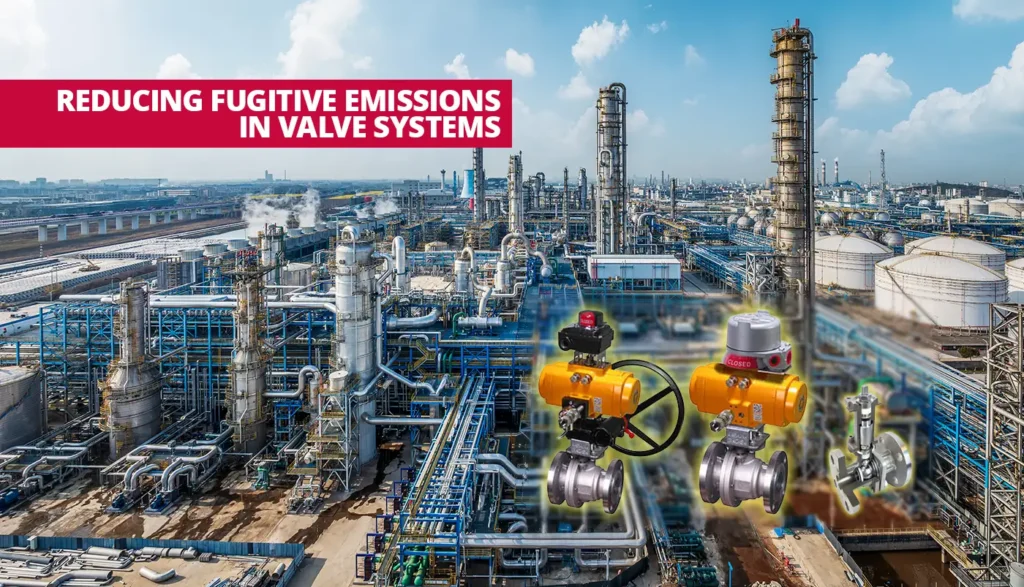
Reducing fugitive emissions in valve systems is getting more attention for good reasons.
These leaks are often invisible. They can start small. They may not trigger immediate alarms. But over time, they create real problems. Product loss. Safety concerns. More maintenance. More downtime. More regulatory pressure.
According to the Global Methane Tracker 2025 report published by the International Energy Agency, methane is responsible for around 30% of the rise in global temperatures since the Industrial Revolution, and the energy sector accounts for more than 35% of methane emissions from human activity. The same report notes that many of these emissions can be reduced with existing technology.
For engineers and plant operators, that matters. But the practical issue is even simpler. If a valve assembly leaks, the system is not performing the way it should.
Reducing fugitive emissions in valve systems starts with better decisions early. That means smart valve selection. It also means using automation and accessories that support tighter control, more repeatable operation, and dependable shutoff.
What Reducing Fugitive Emissions in Valve Systems Really Means
Fugitive emissions are unintended leaks from process equipment.
The EPA describes equipment leaks as unintentional emissions that can come from connectors, valves, open-ended lines, pressure relief valves, and other components.
In valve systems, stem seals and packing are common problem areas because they must allow movement while still containing the media. Over time, cycling, heat, pressure changes, corrosion, and wear can weaken sealing performance.
That is why reducing fugitive emissions in valve systems is not only about choosing a valve with the right flow path or pressure class.
Important considerations:
- How the valve seals
- How often it cycles
- How well it matches the media and operating conditions
- Whether the automated assembly is engineered as a complete package.
In some industries, this is a compliance issue. In others, it starts as a reliability issue. In many plants, it is both. EPA’s 2024 final rule on oil and natural gas operations is another reminder that fugitive emissions remain a serious design and operating concern.
Why Smart Valve Selection Matters When Reducing Fugitive Emissions in Valve Systems
Not every valve is designed for low-emission service.
A valve may handle pressure and temperature well. It may perform adequately in ordinary shutoff duty. That does not automatically make it a strong choice for minimizing leakage over time. When reducing fugitive emissions in valve systems is a priority, selection needs to go deeper than basic pressure and connection specs.
Here are some of the factors that matter most:
- Stem sealing design. Packing, seal materials, and live-loaded arrangements can have a major impact on long-term leakage resistance.
- Service conditions. Pressure, temperature, cycling frequency, and thermal shock all affect sealing performance.
- Media compatibility. Hazardous, corrosive, or volatile media demand more careful material and seal selection.
- Valve style. Ball, plug, butterfly, and gate valves each have strengths depending on the application.
- Maintainability. A valve that is easier to service in the field can reduce lifecycle cost and improve uptime.
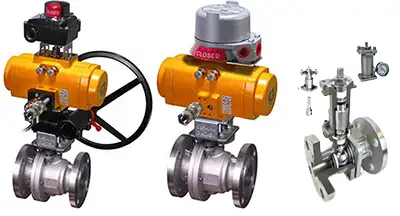
This is where low-emission valve designs make a difference. Our low fugitive emission valve offering includes ball valves with emission containment packs, plug valves, butterfly valves, and gate valves with special low-emission stem seals.
For example, the 150F/300F flanged ball valve series is well suited for process and petrochemical applications and features a floating-ball, protected-seat design, a spiral-wound body gasket with a secondary metal-to-metal seal, and reinforced live-loaded stem packing.
Where an added layer of protection is needed, the FEX Fugitive Emission Containment Pack provides a secondary sealing system.
How Automation Supports Reducing Fugitive Emissions in Valve Systems
Automation alone does not eliminate fugitive emissions.
But the right automation strategy can reduce the operating conditions that make leaks more likely. Manual valves depend heavily on operator consistency. They may be left partially open. They may be cycled too aggressively. They may not be monitored closely enough. In demanding service, that creates risk.
Automation improves consistency. It also improves visibility. A properly matched actuator and accessory package can help by:
- Delivering repeatable valve movement instead of inconsistent manual operation
- Supporting fail-safe action when spring return performance is required
- Providing clear position feedback through limit switches
- Allowing better controlled movement through valve positioners
- Reducing unnecessary operator intervention in hazardous or hard-to-access areas
Assured Automation’s C Series pneumatic actuators are built for high-cycle service and support NAMUR accessory integration and direct mounting. In applications where frequent cycling contributes to packing wear, a well-matched actuator can help support more consistent valve performance over time.
In short, good automation protects good valve selection. It makes the operation more repeatable. It makes status easier to confirm. And it supports a more disciplined approach to reducing fugitive emissions in valve systems.
Low Fugitive Emission Valves for Demanding Valve Systems
Different applications call for different valve styles.
For quarter-turn isolation in petrochemical service, a flanged ball valve may be the best fit. For hazardous media, a low-emission plug valve may offer advantages. For large lines or severe service, a triple-offset butterfly valve may be the better choice.
That is why reducing fugitive emissions in valve systems should never become a one-valve solution.
Our XP3 low-fugitive-emission plug valve is designed to deliver exceptional fugitive emission control at ISO 15848-1 performance levels and can be automated with pneumatic or electric actuators.
For severe-duty shutoff or throttling service, the HPX triple offset low emission butterfly valve is another strong option. Assured Automation lists high-temperature graphite stem packing to help prevent fugitive emissions, field-repairable seats, and tight shutoff performance for demanding gas and liquid applications.
The lesson here is straightforward. The best valve for reducing emissions depends on the application.
Reducing Fugitive Emissions in Valve Systems Requires a Complete Assembly Approach
This is where many projects fall short.
Teams focus on the valve body and stop there. But emissions performance depends on the full assembly – valve, actuator, mounting hardware, accessories, feedback devices, configuration, and testing.
A well-designed automated assembly reduces uncertainty. It improves alignment between the actuator and the valve. It also makes it easier to specify the controls needed for the application.
Assured Automation offers complete automated valve assemblies that can include actuators, limit switches, solenoid valves, modulating positioners, and manual override devices, with assemblies tested in-house before shipping.
This matters because leak reduction is a systems issue. If the valve is right but the actuator is poorly matched, wear can increase. If the right accessories are missing, visibility drops. If the assembly is not engineered and tested as a package, avoidable problems can surface before or shortly after startup.
A Practical Plan for Reducing Fugitive Emissions in Valve Systems
A practical emissions-reduction strategy should include more than product selection.
It should include a process. Here is a sound approach:
- Identify the highest-risk services first. Start with hazardous media, high-cycle duty, thermal cycling, and difficult-to-access valves.
- Review leak and maintenance history. Look for repeated problems at stems, seals, or packing areas.
- Match valve style to service. Do not default to the same valve style for every application.
- Specify low-emission sealing where needed. This may include live-loaded packing, graphite sealing, or containment packs.
- Match the actuator to the torque and duty cycle. A poor match can increase wear and reduce repeatability.
- Add feedback and control accessories where appropriate. Better control and visibility support better reliability.
- Treat the assembly as one engineered package. This reduces integration problems and supports performance.
- Think beyond purchase price. A lower-cost valve that leaks is rarely the lower-cost solution.
The opportunity is significant. The IEA says that around 70% of methane emissions from the fossil fuel sector could be avoided with existing technologies, and around 30% of oil and gas methane emissions could be avoided with measures that yield positive returns at today’s energy prices. That is not just an environmental argument. It is a strong argument for operating and reliability.
To summarize, reducing fugitive emissions in valve systems requires more than choosing a valve with the right size or pressure rating.
It requires smarter valve selection, improved sealing strategies, properly matched automation, and a complete assembly approach to support long-term reliability.
When the application is demanding, the details matter early. Getting those details right can help reduce leakage, improve operating consistency, and support compliance goals.
Talk to the Valve Automation Experts
If you are working to reduce fugitive emissions in valve systems, the valve automation specialists at Assured Automation can help. We can assist with selecting the right valve, actuator, sealing options, and automation accessories for your specific service conditions.
Contact our valve automation experts to discuss your application requirements.