$
$ Search




 ,
,




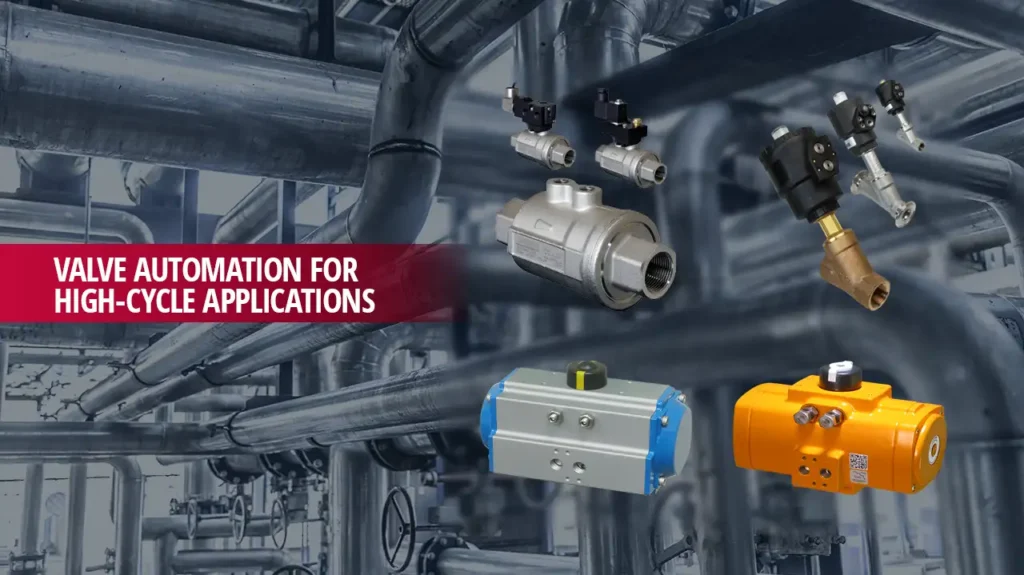
Valve automation for high-cycle applications places unique demands on valves, actuators, and control components. In many automated processes, valves may open and close thousands of times per day, making reliability and mechanical durability critical.
These environments are common in many industries, including:
- Chemical processing
- Emissions control systems
- Automated packaging lines
- Semiconductor manufacturing equipment
- Test benches and laboratory systems
In some industrial systems, the cycling demand can be extremely high. For example, valves used in regenerative thermal oxidizers (RTOs) may operate more than 200,000 cycles per year while maintaining reliable sealing performance. (Source – Chemical Engineering).
Under these conditions, poorly designed automation systems can fail prematurely. Common causes include:
- Incorrect actuator sizing
- Unsuitable valve types
- Seal materials that wear quickly
- Control accessories not designed for frequent switching
Designing valve automation for high-cycle applications, therefore, requires careful evaluation of the entire system—not just the valve itself. Engineers must consider valve selection, actuator performance, materials of construction, and overall system integration to ensure reliable long-term operation.
What Defines Valve Automation for High-Cycle Applications?
Not every automated valve application qualifies as “high-cycle.” In many industrial processes, valves may operate only a few times per hour or even per day. High-cycle environments are different. The valve and actuator must operate repeatedly, often with little downtime between cycles. Engineers typically consider an application high-cycle when the valve must operate thousands of times per day or hundreds of thousands of cycles per year.
Typical examples include:
- Automated batching and dosing systems
- Packaging and filling equipment
- Automated test stands
- Emissions control systems such as RTOs
- Semiconductor and electronics manufacturing tools
In these environments, the automation system must handle continuous mechanical motion. Each cycle introduces wear to multiple components, including:
- Valve seats and seals
- Actuator gears or pistons
- Stem packing and bearings
- Solenoid valves and control accessories
Over time, even small inefficiencies can accumulate. Excessive torque requirements, improper actuator sizing, or unsuitable materials may shorten system life.
For this reason, engineers designing valve automation for high-cycle applications often focus on equipment specifically built to tolerate frequent operation.
Examples include:
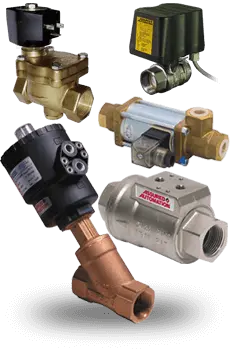
- Actuated 2-way and 3-way ball valves
- Pneumatic actuator systems designed for frequent operation
- Valve designs optimized for rapid cycling, such as coaxial valves, include the VA Series
A U.S. Gulf Coast refinery with a hydrogen PSA unit experienced years of chronic valve failures that repeatedly reduced hydrogen production — directly impacting downstream operations. Only a complete valve replacement program resolved the problem. (Source: Chemical Processing)
Selecting the Right Valve Type for High-Cycle Valve Automation
Valve selection is one of the most important decisions when designing valve automation for high-cycle applications. Some valves are better suited for continuous cycling because they minimize friction, reduce wear on internal components, and maintain sealing performance over long operating periods.
Engineers typically evaluate several factors when selecting valves for high-cycle automation:
- Number of expected cycles per year
- Pressure and temperature conditions
- Fluid compatibility
- Response speed requirements
- Maintenance accessibility
Ball Valves
Ball valves are widely used in automated systems because they provide:
- Simple quarter-turn operation
- Reliable shutoff
- Compact automation packages
Integrated packages, such as the VA Series, combine the valve, actuator, and mounting hardware into a compact assembly designed for reliable automation.
Coaxial Valves
Coaxial valves can provide important advantages. These valves feature a balanced internal structure that reduces friction during operation.
Benefits may include:
- Fast response time
- High cycle capability
- Reduced actuator force requirements
Products such as the VA Series “Valve + Actuator” on-off valves are often used in automated test systems, gas handling systems, and other demanding environments.
Angle Seat Valves
Angle Seat Valves are commonly used in steam, air, and fluid control applications where frequent operation is required.
Advantages include:
- Strong flow capacity
- Durable piston-style actuation
- Long service life in repetitive applications
Selecting the appropriate valve type helps reduce mechanical stress on the automation system. However, valve design alone does not determine system reliability. The actuator must also be properly selected and sized to handle the expected cycling demands.
Actuator Selection Considerations for High-Cycle Valve Automation
Actuator selection plays a major role in the reliability of valve automation for high-cycle applications. Even when the correct valve is chosen, an improperly selected actuator can shorten system life or create unnecessary maintenance problems.
High-cycle operation means the actuator must deliver consistent torque and speed across thousands—or even millions—of cycles. Engineers should evaluate several factors when selecting actuators for these demanding environments.
Key considerations include:
- Required torque output
- Actuator duty cycle rating
- Response speed
- Air or power consumption
- Operating environment
Pneumatic Actuators
Pneumatic actuators are widely preferred for high-cycle automation because they are mechanically simple and capable of rapid operation.
Advantages include:
- Fast actuation speeds
- High cycle durability
- Relatively simple internal construction
- Ability to operate in harsh environments
These characteristics make pneumatic actuators suitable for applications such as automated production equipment, test systems, and fluid handling processes.
For example, rack-and-pinion pneumatic actuators are commonly used with quarter-turn valves in automated systems because they provide reliable torque output and repeatable operation.
Electric Actuators
Electric actuators can also be used in automated valve systems, particularly when:
- Precise positioning is required
- Compressed air is unavailable
- Cycle speeds are moderate
However, electric actuators may not always be the first choice in extremely high-cycle environments due to heat generation and duty cycle limitations.
Proper Actuator Sizing
Incorrect actuator sizing is one of the most common causes of failure in automated valve systems.
If an actuator is undersized, it may struggle to overcome the torque required by the valve, leading to premature wear or incomplete valve movement.
If it is oversized, the system may cycle too aggressively, increasing mechanical stress on the valve and automation components.
Assured Automation’s C Series and F Series rack and pinion pneumatic actuators are rated for up to one million cycles — making them well-suited for the sustained mechanical demands of high-cycle environments.
Actuator selection is only part of the equation. High-cycle environments also place significant stress on seals, seats, and other wear components. Choosing the right materials and design features can help extend system life and reduce maintenance.
Control Accessories Matter in High-Cycle Valve Automation
When engineers design valve automation for high-cycle applications, the focus is often on the valve and actuator. However, smaller automation components, such as solenoid valves, limit switches, and position feedback devices, also operate each time the valve cycles.
In high-cycle environments, these accessories may switch hundreds of thousands of times per year, making durability and reliability just as important as the valve itself.
Engineers should evaluate the cycle life, switching speed, environmental ratings, and control system compatibility of these components. Selecting properly rated accessories helps ensure consistent actuator performance and reliable position feedback in demanding applications.
Assured Automation offers a range of automation accessories for automated valve systems, including solenoid valves and limit switch boxes.
Design Checklist for High-Cycle Valve Automation
Engineers evaluating valve automation for high-cycle applications should consider several important factors during system design:
- Expected number of cycles per day or per year
- Selecting valve types suited for frequent operation
- Proper actuator sizing and torque margins
- Automation accessories capable of frequent switching
- Reliable system integration and installation alignment
When these factors are addressed early in the design process, automated valve systems are far more likely to achieve reliable long-term performance.
Talk to the Valve Automation Experts
If you are evaluating automation options for a demanding high-cycle application, the valve automation specialists at Assured Automation can help. Our team can assist with selecting the right valves, actuators, and automation accessories to ensure dependable performance in your specific process.
Contact our valve automation experts today to discuss your application requirements.