$
$ Search




 ,
,




Modern data centers are engineered around redundancy models such as N+1 and 2N to prevent downtime. Every major cooling, power, and fluid-handling subsystem is designed with backup capacity. However, redundancy only performs as intended when isolation and control components respond instantly and predictably.
At the same time, compute density — the amount of processing power packed into each rack — is increasing. AI-driven workloads are generating significantly higher thermal loads than traditional server environments.
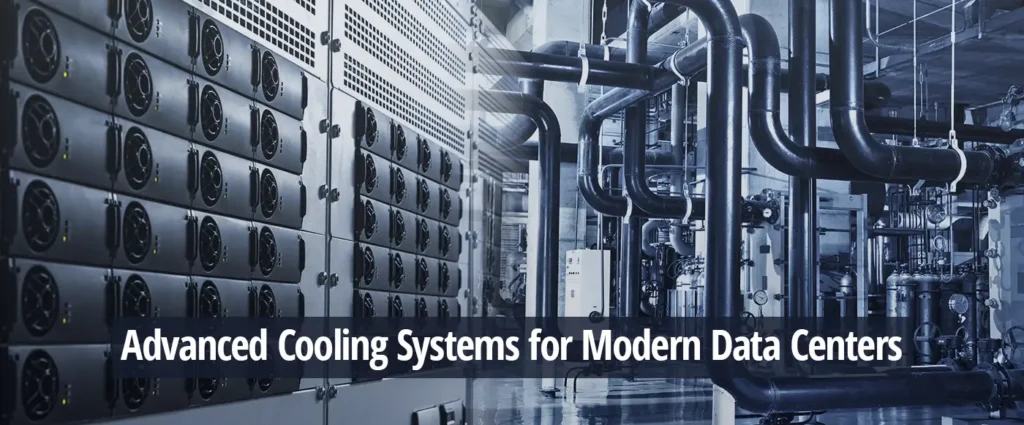
As noted in a recent Electronics 360 article, AI data centers are pushing traditional cooling models beyond their limits. Operators are being forced to adopt more advanced cooling architectures, including liquid cooling and hybrid systems.
As cooling infrastructure becomes more complex, so do the control and isolation requirements. Pumps, heat exchangers, chillers, and distribution units must be isolated quickly during fault conditions without interrupting adjacent systems.
In these environments, automated valves are not secondary components — they are critical elements of system reliability.
Why Fail-Safe Valve Automation is Critical in Redundant Infrastructure
In redundant data center infrastructure, isolation speed and fail-safe position matter. When a pump fails, a chiller requires service, or a leak is detected, affected loops must be isolated immediately to prevent cascading failures.
Fail-safe automation ensures valves move to a predetermined safe position during power loss or system faults. Spring-return pneumatic actuators provide mechanical fail positioning, while electric actuators with position feedback support controlled switching between primary and backup circuits.
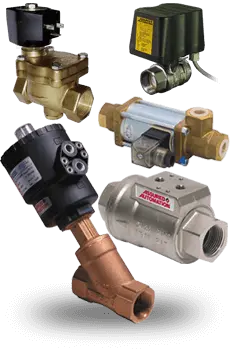
Properly specified actuated ball valves and actuated butterfly valves allow operators to:
- Isolate individual cooling loops
- Redirect flow between redundant systems
- Perform maintenance without a full shutdown
- Protect adjacent equipment during failure events
Automated valve assemblies, matched correctly to the application, play a foundational role in maintaining uptime in mission-critical data center environments.
Chiller Systems in Data Centers
Chiller systems form the backbone of many large-scale data center cooling architectures. Primary and backup chillers are often configured in N+1 or 2N arrangements to ensure continuous thermal management.
Automated valves play a central role in isolating individual chillers during maintenance or fault conditions. When a compressor failure or flow imbalance occurs, actuated 2-way ball valves and actuated butterfly valves allow operators to remove a chiller from service while keeping redundant units online.
Electric valve actuators with position feedback support controlled switching between primary and secondary loops, ensuring predictable flow redirection.
Well-matched automated valve assemblies help prevent cascading failures and maintain thermal stability across the facility.
External Cooling Loops
External cooling loops introduce additional reliability considerations. These systems may include cooling towers, dry coolers, or heat rejection units exposed to outdoor environmental conditions. Redundant loop configurations are common, allowing operators to switch between circuits during seasonal changes or equipment servicing.
In these environments, corrosion resistance and actuator durability become important specification factors. Stainless steel valve bodies, such as the 38 Series stainless steel ball valves, are often selected for strength and long-term performance in demanding conditions.
Pneumatic valve actuators are frequently used where rapid response and reliable fail-safe operation are required.
By combining corrosion-resistant materials with properly specified actuation, automated valve assemblies support reliable switchover between redundant cooling paths while maintaining system integrity.
Liquid Cooling Systems
Many modern data centers are moving beyond traditional air cooling toward liquid cooling architectures. These systems circulate coolant directly to high-density racks or immersion systems to manage elevated thermal loads. While liquid cooling improves efficiency, it also increases system complexity and the consequences of leakage or component failure.
Automated valves allow operators to quickly isolate affected racks or segments if a leak is detected, while maintaining flow through redundant paths.
In larger systems, 3-way actuated ball valves are often used to redirect flow between primary and secondary circuits or bypass heat exchangers during maintenance.
Compact actuated ball valves paired with electric valve actuators provide accurate control and predictable switching between cooling paths.
Proper valve and actuator selection ensures reliable performance under varying flow rates and pressure conditions. In high-density environments, controlled isolation is not optional — it is essential to protecting equipment and maintaining uptime.
Liquid Distribution Units (LDUs)
LDUs regulate and distribute coolant to multiple racks or zones while maintaining pressure stability and flow balance. In redundant configurations, they must support isolation and service without interrupting adjacent circuits.
Automated valves within LDUs enable controlled startup and shutdown of individual loops. When maintenance is required, specific branches can be isolated while the remainder of the system continues operating. 2-way and 3-way actuated ball valves are commonly used for flow diversion, bypass, and balancing functions.
Electric actuators with position feedback provide visibility into valve status, supporting system monitoring and coordinated switching between redundant paths. In mission-critical environments, the ability to verify valve position and confirm isolation status adds an additional layer of operational confidence.
As liquid cooling deployments expand, LDUs become increasingly central to maintaining redundancy. Automated valve assemblies matched to system requirements help ensure predictable isolation and controlled flow management across the facility.
Water Recovery and Treatment Systems
As data centers expand, water recovery and treatment systems are becoming more common. These systems support filtration, chemical conditioning, and reuse strategies to improve efficiency and reduce environmental impact.
In facilities using evaporative or hybrid cooling, water quality directly affects heat transfer performance and long-term equipment reliability.
Redundant pump arrangements and parallel filtration loops are often incorporated to maintain continuous operation. Automated valves allow operators to divert flow through alternate treatment paths, isolate filters for servicing, or redirect water during abnormal conditions.
Actuated ball valves and actuated butterfly valves are frequently used for controlled diversion and isolation within treatment skids. In applications involving treated water or chemically conditioned fluids, corrosion resistance becomes an important consideration.
When properly specified, automated valve assemblies help ensure that water treatment and recovery processes support, rather than compromise, overall cooling system redundancy.
Engineering Redundancy Requires Reliable Isolation
Data center redundancy is built on layered protection — backup chillers, parallel cooling loops, redundant pumps, and secondary distribution paths. Yet redundancy only performs as designed when isolation and switching components respond predictably under real-world conditions.
As AI-driven workloads increase compute density and cooling complexity, infrastructure systems must adapt. More advanced cooling architectures introduce additional control points, higher pressures, and tighter operational tolerances.
In this environment, automated valves are not peripheral components. They are foundational to controlled isolation, fail-safe positioning, and coordinated switchover between redundant systems.
Proper valve sizing, actuator selection, and material compatibility all contribute to reliable performance. Whether isolating a chiller, redirecting flow within a Liquid Distribution Unit, or managing diversion in a water treatment skid, automated valve assemblies must perform without hesitation.
For assistance specifying automated valves for data center redundancy and fail-safe systems, contact the valve automation specialists at Assured Automation. Our experience in configuring matched valve and actuator assemblies gives you the peace of mind that you’ll get reliable performance in mission-critical infrastructure.