$
$ Search




 ,
,




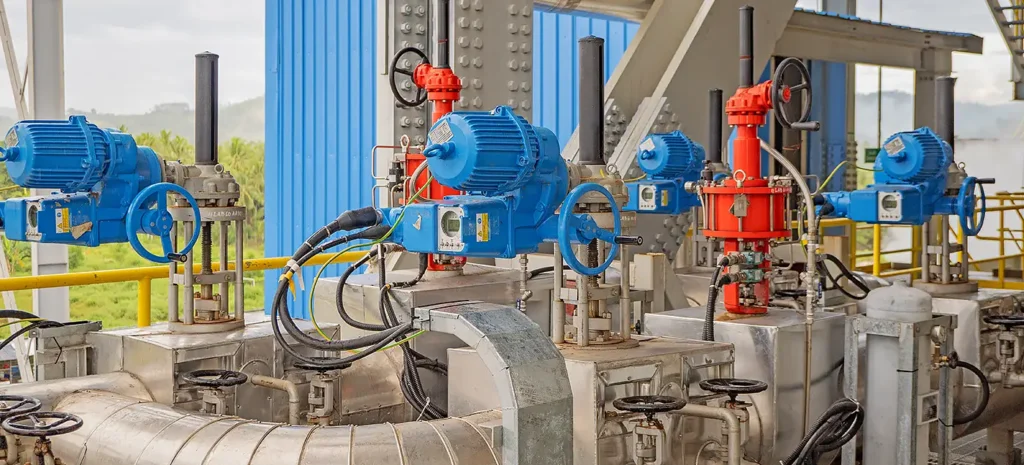
In critical fluid handling applications, performance issues rarely appear all at once. They surface as unplanned downtime, inconsistent product quality, rising maintenance demands, or growing safety concerns. These problems are usually symptoms of deeper system limitations, not isolated failures. As operating conditions become more demanding, small inconsistencies in flow control or response time can disrupt entire processes.
While frequently treated as standard components, valves play a critical role in controlling flow, pressure, and isolation. In many systems, manual valves were selected based on upfront cost or legacy practices rather than long-term performance requirements.
As process complexity and cycle rates increase, manual operation introduces variability that limits reliability. This is where automated valves for fluid handling begin to deliver measurable performance advantages.
What Defines a Critical Fluid Handling Application?
A critical fluid-handling application is defined as one in which reliability, consistency, and control directly affect safety, quality, or production continuity. These environments leave little margin for error.
Common characteristics include high cycle frequency, where valves must operate reliably over thousands or even millions of cycles, and tight process tolerances that require precise, repeatable flow control.
Many critical applications also involve sensitive, hazardous, or high-value media, increasing the consequences of leakage, contamination, or improper valve positioning. Regulatory oversight, quality standards, or safety requirements further raise the stakes.
In these environments, even minor performance deviations can cascade into larger operational issues. Understanding what makes an application critical is the first step toward selecting valve solutions that can support long-term system performance.
Why Manual Valves Struggle in Modern Fluid Handling Systems
Manual valves remain suitable for simple, low-demand applications. In critical fluid handling systems, however, their limitations become more apparent as operating requirements increase.
Manual operation introduces variability that affects flow consistency, response time, and overall process stability. Operator-dependent actuation makes precise, repeatable control difficult, particularly in high-cycle or time-sensitive processes.
Wear from frequent operation accelerates maintenance needs and increases the risk of leakage or failure. In regulated or hazardous environments, manual intervention also raises safety concerns and limits opportunities for automation and monitoring.
Manual vs. Automated Valves in Fluid Handling Applications
The best way to understand the difference between manual and automated valves is to evaluate outcomes rather than features. Manual valves rely on human interaction, introducing variability and limiting scalability. Automated valves provide consistent performance regardless of cycle frequency or process complexity.
In critical applications, automation improves reliability, reduces unplanned downtime, and supports long-term system performance. While manual valves may offer lower initial cost, automated solutions often deliver better lifecycle value when reliability, maintenance, and process stability are considered.
How Automated Valves Improve Fluid Handling Performance
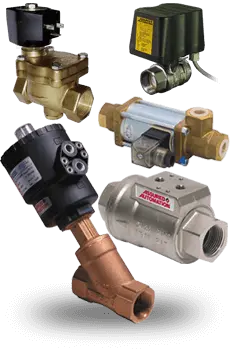
Automated valves for fluid handling address many of the performance limitations associated with manual operation by delivering consistent, repeatable control. Actuation is precise and independent of operator skills and experience, improving process stability and reducing variability.
Automation also supports faster response times and integration with control systems, enabling real-time monitoring and early detection of performance issues. In high-cycle applications, automated valves reduce mechanical wear caused by improper operation, extending service life and lowering maintenance demands. Together, these benefits contribute to improved uptime, better product consistency, and safer operation in critical environments.
Important Considerations When Selecting Automated Valves for Fluid Handling
Selecting automated valves requires more than choosing a valve actuator. Valve type, materials, duty cycle, and operating environment must align with application requirements. Control system compatibility and fail-safe behavior are also critical considerations.
Equally important is application expertise. Proper selection and integration ensure automated valves deliver the expected performance improvements without introducing unnecessary complexity.
Where Automated Valves Deliver the Greatest Impact
Automated valves deliver the greatest benefit in high-cycle fluid-handling systems, processes with tight control requirements, and environments where downtime or quality deviations are costly. Applications involving hazardous media or safety risks also benefit from reduced manual intervention and improved control.
In these scenarios, automation supports both immediate performance improvements and long-term operational reliability.
Designing Fluid Handling Systems for Long-Term Performance
In critical applications, valve selection directly influences system reliability, product quality, and operational efficiency. Automated valves for fluid handling offer a practical way to reduce variability, improve control, and support consistent performance as system demands increase.
Evaluating automation at the application level—rather than as a component upgrade—helps ensure fluid handling systems are designed for long-term success.
Key Takeaways
- Fluid-handling performance issues in critical applications are often rooted in system design, not in isolated component failures.
- Manual valves introduce variability, limiting reliability, repeatability, and scalability in demanding environments.
- Automated valves for fluid handling improve uptime, process control, and product consistency by eliminating operator dependence.
- The greatest performance gains come from application-specific valve selection, not one-size-fits-all automation.
- Long-term reliability depends on aligning valve design, actuation, and controls with real operating conditions.
In critical fluid handling applications, valve automation decisions have long-term consequences for reliability, safety, and performance. Choosing the right solution requires more than catalog specifications—it requires application expertise.
If you’re evaluating automated valves for fluid handling or looking to improve performance in a critical application, talk to one of our valve automation experts. Our team can help you select and configure solutions tailored to your operating requirements, not just your component list.
Contact us today:
- Toll Free: 1-800-899-0553 (Sí, hablamos español en la extensión 123)
- Local: 732-381-2255
- Sales: sales@assuredautomation.com